
Spiritual reform, moral inventory and the chain of personal influence before A.A.
Oxford Group Era — World
The Oxford Group did not create Alcoholics Anonymous, but it formed an important part of the spiritual and historical environment from which A.A. emerged. Its emphasis on surrender, confession, restitution, moral examination and helping others influenced several people who became central to early A.A. history.
01 — Origins
Frank Buchman and the Movement’s Origin
Frank Nathan Daniel Buchman was a Lutheran minister who developed a religious movement initially known as First Century Christian Fellowship.
During the 1920s and 1930s, the movement became widely known as the Oxford Group. Buchman believed that personal and social problems could be addressed through individual moral and spiritual change.
In 1938, the movement adopted the name Moral Re-Armament.
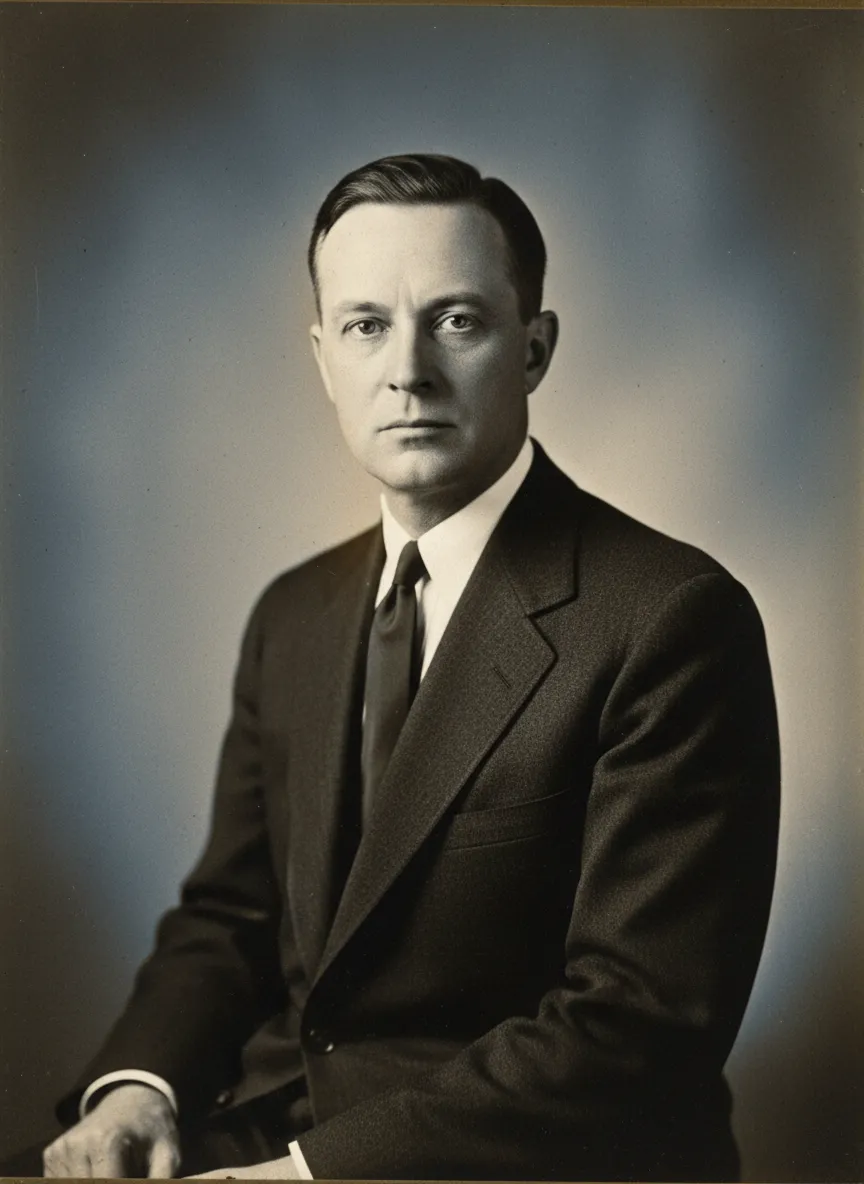
The Oxford Group was associated with people connected to Oxford University, but it was not formally governed or controlled by the university.
02 — Principles
A Framework for Personal and Spiritual Change
Different Oxford Group sources arranged the movement’s principles in different ways. The concepts that became most influential in the story of Alcoholics Anonymous included the Four Absolutes, the Five C’s and a series of practical spiritual disciplines.
Absolute Honesty
A commitment to examining deception, concealment and self-deception.
Absolute Purity
An ideal for evaluating motives, relationships and conduct.
Absolute Unselfishness
A challenge to place service and the welfare of others above self-centered motives.
Absolute Love
An ideal of active concern, forgiveness and goodwill toward others.
The Four Absolutes were ideals against which members examined their conduct. They were not presented as standards that ordinary people were expected to perform perfectly.
03 — PRACTICE
The Practices Behind the Principles
The Oxford Group emphasized that spiritual belief should lead to observable personal conduct. Its members practiced surrender, quiet listening, confession, restitution, personal sharing and work with others.
01
Surrender to God
Recognizing that self-direction alone had failed and becoming willing to seek spiritual direction.
02
Quiet Time and Guidance
Setting aside time for prayer, silence and listening for divine guidance.
03
Sharing Personal Experience
Speaking openly about one’s own failures, change and spiritual experience.
04
Confession
Acknowledging defects, dishonesty and wrongdoing to another person.
05
Restitution
Attempting to repair harms and correct past conduct.
06
Working With Other People
Helping others pursue the same kind of moral and spiritual transformation.
07
Changed Conduct
The objective was not merely to affirm beliefs but to live differently.
The Oxford Group’s method focused less on abstract theology and more on personal change that could be confessed, demonstrated and shared.
04 — Inventory
How Oxford Group Self-Examination Helped Shape A.A.’s Written Inventory
A.A.’s inventory process did not come from a single Oxford Group document. It developed through several overlapping influences and was later reorganized into a more systematic written process.
Oxford Group Approach
- Moral self-examination
- Confession
- Testing conduct against spiritual ideals
- Restitution
- Changed behavior
Emerging A.A. Approach
- Written and structured
- Organized by specific resentments
- Examined what parts of self were affected
- Identified selfishness, dishonesty, self-seeking and fear
- Pointed toward corrective action
The resentment inventory was not simply copied from Frank Buchman. It was an A.A. development built partly from Oxford Group confession, self-examination and restitution, then reshaped through practical experience with alcoholics.
05 — The Chain
From Spiritual Experience to Alcoholic-to-Alcoholic Identification
After his contact with Carl Jung and later Oxford Group involvement, Rowland Hazard became part of the chain of personal influence that eventually reached Bill W.
Ebby’s importance did not depend on permanent sobriety. His immediate transformation allowed Bill to see spiritual change presented by someone he personally knew and identified with.
06 - Akron
Spiritual Knowledge Was Not Yet Enough
Dr. Robert Holbrook Smith was an Akron physician whose drinking had progressed despite medical knowledge, family efforts, and religious interest. Around 1933, Dr. Bob and his wife Anne began participating in the Akron Oxford Group. He read extensively from the Bible, openly acknowledged his drinking problem within the group, and continued trying to apply spiritual principles. Nevertheless, he could not remain sober.
What Was Present
- Religious interest
- Extensive Bible reading
- Spiritual literature
- Oxford Group participation
- Open acknowledgment of the drinking problem
- Moral and spiritual principles
What Was Still Missing
- Sustained sobriety
- Specific identification between alcoholics
- A method translated directly into the experience of chronic alcoholism
- The personal encounter that later occurred between Bill and Dr. Bob
Spiritual principles alone had not yet been translated into the specific alcoholic-to-alcoholic identification that became central to A.A.
A.A.’s official history states that both Bill and Dr. Bob had Oxford Group contact before meeting, and that Dr. Bob’s Oxford Group membership had not been sufficient to produce sobriety.
Historical Significance
The Oxford Group gave Dr. Bob spiritual language, community and practices. What had not yet emerged was the direct transmission of recovery from one alcoholic to another through shared experience.
The Oxford Group prepared the ground. Alcoholic identification changed the method.
07 — Sources and Historical Context
Understanding Influence Without Oversimplifying It
The Oxford Group contributed important spiritual principles, practices and personal connections to the environment from which Alcoholics Anonymous emerged. However, A.A. did not simply reproduce the Oxford Group system. A.A. transformed these influences through direct work between alcoholics, medical understanding of alcoholism, Bill W.’s experience trying to help others, Dr. Bob’s experience in Akron, the writing and revision of the Big Book, and the development of a structured inventory and recovery program.
Historical influence should not be confused with exact duplication. A.A. adapted, reorganized and expanded ideas drawn from several religious, medical, psychological and personal sources.
Alcoholics Anonymous Historical Sources
Alcoholics Anonymous Comes of Age
Alcoholics Anonymous
Official A.A. historical materials
Historical accounts concerning Bill W. and Dr. Bob
Accounts of early A.A. contact with the Oxford Group
Oxford Group Sources
Historical material concerning Frank Buchman
Records of First Century Christian Fellowship
Oxford Group writings regarding the Four Absolutes
Oxford Group descriptions of the Five C’s
Historical material concerning Moral Re-Armament
Religious and Spiritual Influences
The Epistle of James
The Sermon on the Mount
1 Corinthians 13
Related Historical Figures
Carl Jung
Rowland Hazard
Ebby Thacher
Frank Buchman
Dr. Robert Holbrook Smith
Bill W.
GEORGIA A.A. HISTORY ARCHIVE
Documenting the worldwide origins, statewide development, and local Athens history of Alcoholics Anonymous.
Navigation
Home
World History
Georgia History
Athens History
Interactive Map
People
Groups
Documents
Sources
Research
Research Method
Full Bibliography
Submit a Record
Accessibility
Contact
This independent educational history project is not affiliated with, endorsed by or officially sponsored by Alcoholics Anonymous World Services, Inc. Alcoholics Anonymous, A.A. and related marks may be protected trademarks. Historical interpretations should be checked against official A.A. publications and primary source materials.