
.
LATE 1700s — EARLY 1930s
BEFORE A.A.
The movements, theories, experiments, and individuals that prepared the world for Alcoholics Anonymous.
A.A. did not suddenly appear in 1935. It developed from centuries of religious reform movements, mutual-aid societies, medical theories, psychological research, and individual experiments in treating alcoholism.
01 — EARLY ATTITUDES TOWARD ALCOHOLISM
MORAL FAILURE OR
MEDICAL CONDITION?
For centuries, persistent drunkenness was treated primarily as a moral failure. The person was regarded as weak, sinful, or undisciplined.
THE MORAL MODEL
Confinement
Institutionalization and physical restriction were standard responses to habitual inebriation, isolating the individual from society.
Religious Conversion
Clergy demanded strict repentance, viewing the condition as a sinful lack of willpower rather than a complex physical affliction.
Social Condemnation
Public shaming and abstinence pledges were strictly enforced as a means to correct what was viewed primarily as a profound character defect.
THE BEGINNING OF A NEW VIEW
During the late eighteenth and nineteenth centuries, some physicians began arguing that habitual drunkenness was not merely misconduct but a condition that could overpower a person’s will.
BENJAMIN RUSH
American physician Benjamin Rush described habitual drunkenness as a disease-like condition in the late 1700s. His interpretation helped introduce the possibility that persistent drinking involved more than simple moral weakness.
Temperance movements later promoted abstinence, although many focused more heavily on broad social reform than on helping individual chronic alcoholics.
02 — BALTIMORE, 1840
When alcoholics began helping
other alcoholics.
The Washingtonian Society began in Baltimore in 1840 when a small group of drinkers committed themselves to abstinence and helping one another.
ALCOHOLICS HELPING ALCOHOLICS
Members relied upon identification and shared experience rather than depending solely on clergy, doctors, or institutions.
PERSONAL TESTIMONY
Meetings included public accounts of drinking, suffering, abstinence, and recovery.
MUTUAL SUPPORT
Members offered direct assistance and encouragement to other people trying to stop drinking.
CONTINUING INVOLVEMENT
The movement recognized that maintaining abstinence required continued participation and support.
The movement expanded rapidly but eventually declined. It became entangled in temperance politics, religious controversies, and public reform campaigns.
- Public personalities.
- Political involvement.
- Broad social reform.
- Religious controversy.
- Anonymity.
- Singleness of purpose.
- Non-affiliation.
- No position on outside issues.
03 - BOSTON, EARLY TWENTIETH CENTURY
A TREATMENT MODEL COMBINING
MEDICINE, PSYCHOLOGY, AND FAITH.
The Emmanuel Movement began at Emmanuel Episcopal Church in Boston in the early twentieth century. Clergymen Elwood Worcester and Samuel McComb worked with physicians and used prayer, suggestion, relaxation, psychology, and personal guidance to treat emotional problems, including alcoholism.
RELIGIOUS FAITH
Prayer, moral renewal, spiritual guidance, and a belief that inner transformation could affect behavior.
MEDICAL COOPERATION
Clergymen worked alongside physicians rather than treating faith and medicine as opposing systems.
PSYCHOLOGICAL METHODS
Suggestion, relaxation, mental discipline, and emerging psychological ideas were incorporated into treatment.
INDIVIDUAL COUNSELING
Treatment involved direct personal guidance rather than relying solely on public preaching or institutional confinement.
LAY ASSISTANCE
Non-professional helpers played a meaningful role in supporting suffering individuals.
Although it was not A.A., the Emmanuel Movement helped establish the idea that alcoholism could be approached simultaneously as a medical, psychological, and spiritual problem.
WHY IT MATTERED
Historical scholarship recognizes the Emmanuel Movement as an important predecessor in American alcoholism treatment.
FAITH
COOPERATION
METHODS
COUNSELING
ASSISTANCE
04 - RICHARD R. PEABODY
Practical Discipline and
Daily Sobriety
Richard Rogers Peabody was a recovered alcoholic and lay therapist influenced by the Emmanuel Movement. He began working with alcoholics in the 1920s and published The Common Sense of Drinking in 1931.
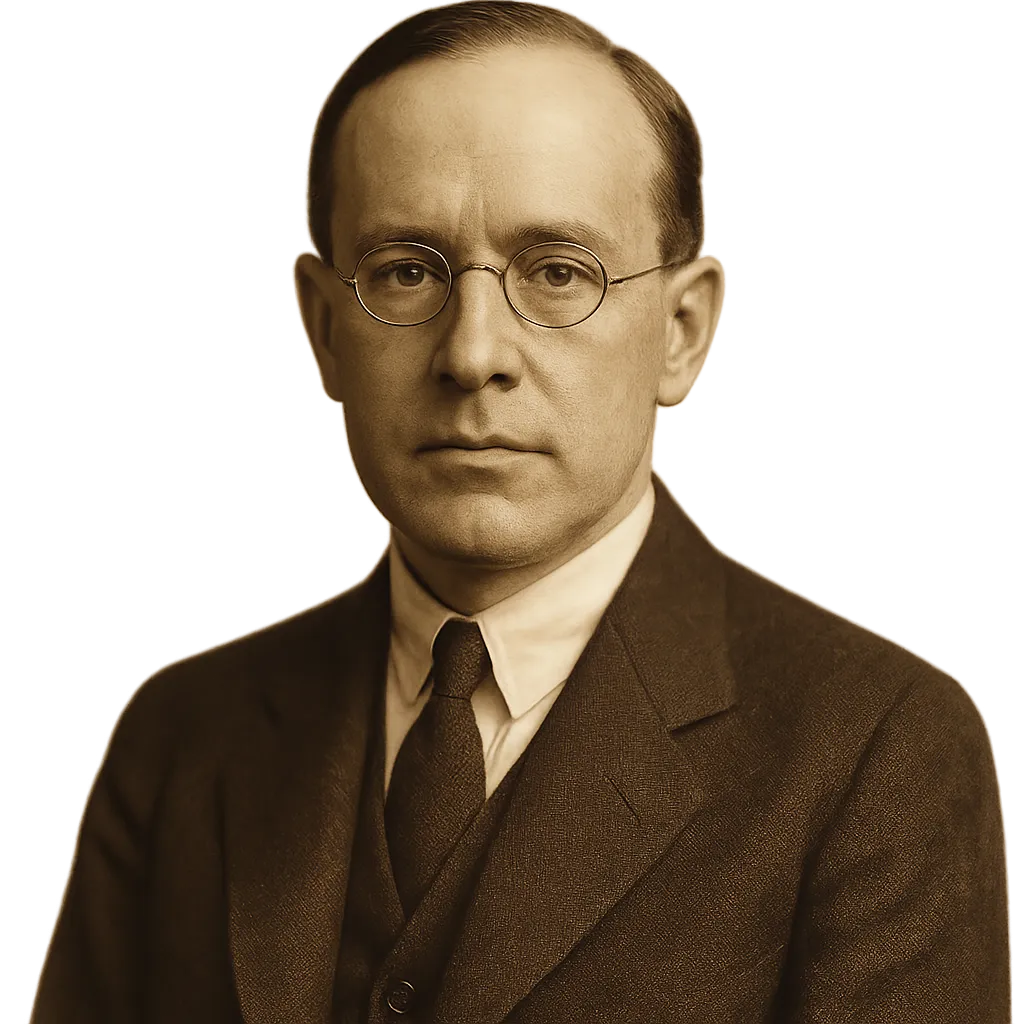
The patient must understand that sobriety is not an event, but a meticulously organized daily practice. Chaos and idle time are the enemies of recovery.
01 - CONTROLLED DRINKING WAS NOT SAFE
Peabody argued that the chronic alcoholic could not safely return to moderate or controlled drinking.
02 - HABITS HAD TO CHANGE COMPLETELY
Sobriety required more than removing alcohol. The person needed to restructure everyday behavior and routines.
03 - RECOVERY OCCURRED ONE DAY AT A TIME
The task was not to guarantee lifelong success all at once, but to organize sobriety into manageable daily periods.
04 - DAILY ROUTINE MATTERED
A disciplined schedule could reduce chaos, indecision, isolation, and opportunities to drink.
05 - SELF-PITY WAS DANGEROUS
Peabody discouraged excessive focus on grievances, suffering, and personal problems.
06 - HONEST CONNECTION COULD BE THERAPEUTIC
Helping or speaking honestly with another sufferer could reduce isolation and strengthen recovery.
PEABODY'S MODEL
- Individual treatment.
- Psychological discipline.
- Professional or lay-therapist direction.
- Paying patients.
- No autonomous fellowship.
- No peer-run worldwide society.
LATER A.A. MODEL
- Mutual fellowship.
- Shared identification.
- No professional membership structure.
- Voluntary participation.
- Group autonomy.
- Recovery through shared experience and service.
Peabody’s treatment was generally more individual, psychological, and professionally directed than A.A. His patients often paid for treatment, and he did not create an autonomous fellowship of recovering alcoholics.
Nevertheless, his writing influenced the language and broader treatment culture surrounding alcoholism before the Big Book. His followers continued using his approach into the 1950s.
05 — TRANSFORMATION OF THE INNER LIFE
Transformation of the
Inner Life
Spiritual experience became a bridge between psychology and recovery.
WILLIAM JAMES AND RELIGIOUS EXPERIENCE
Psychologist and philosopher William James published The Varieties of Religious Experience in 1902. James examined sudden and gradual spiritual transformations, including experiences in which divided or defeated individuals underwent deep internal reorganization.
A dramatic, immediate reorganization of belief, identity, or purpose.
A slower internal change unfolding through practice, reflection, surrender, and experience.
“Transforming spiritual experience could occur in many forms and did not have to follow one strict theology.”
CARL JUNG, ROWLAND HAZARD, AND THE POSSIBILITY OF TRANSFORMATION
Rowland Hazard, an American businessman with a severe drinking problem, sought treatment from Swiss psychiatrist Carl Gustav Jung, probably during the early 1930s. Exact dates and details vary among historical accounts.
According to the version later conveyed in A.A. history, Jung told Rowland that his condition appeared medically hopeless and that certain alcoholics occasionally recovered through profound religious or spiritual transformation.
HISTORICAL DISTINCTION
Jung did not prescribe the Oxford Group by name.
Jung reportedly described the need for a transformative spiritual experience. Rowland subsequently became involved with the Oxford Group, where he found a practical religious community emphasizing surrender, confession, restitution, and service.
Jung's Spiritual Possibility
Rowland's Oxford Group Involvement
Assistance to Ebby Thacher
Ebby's Message to Bill W.
Rowland and other Oxford Group members later assisted Ebby Thacher, whose message directly influenced Bill W.
06 — THE MEDICAL WORLD BEFORE 1935
The Medical World
Before 1935
By the early twentieth century, some physicians increasingly treated alcoholism as a physical and psychological condition rather than merely a vice.

DETOXIFICATION
Physically separating the sufferer from alcohol, often through supervised isolation, though rarely addressing the underlying compulsion.

SEDATIVES
Administering belladonna, paraldehyde, and other suppressants to manage severe withdrawal symptoms and delirium tremens.
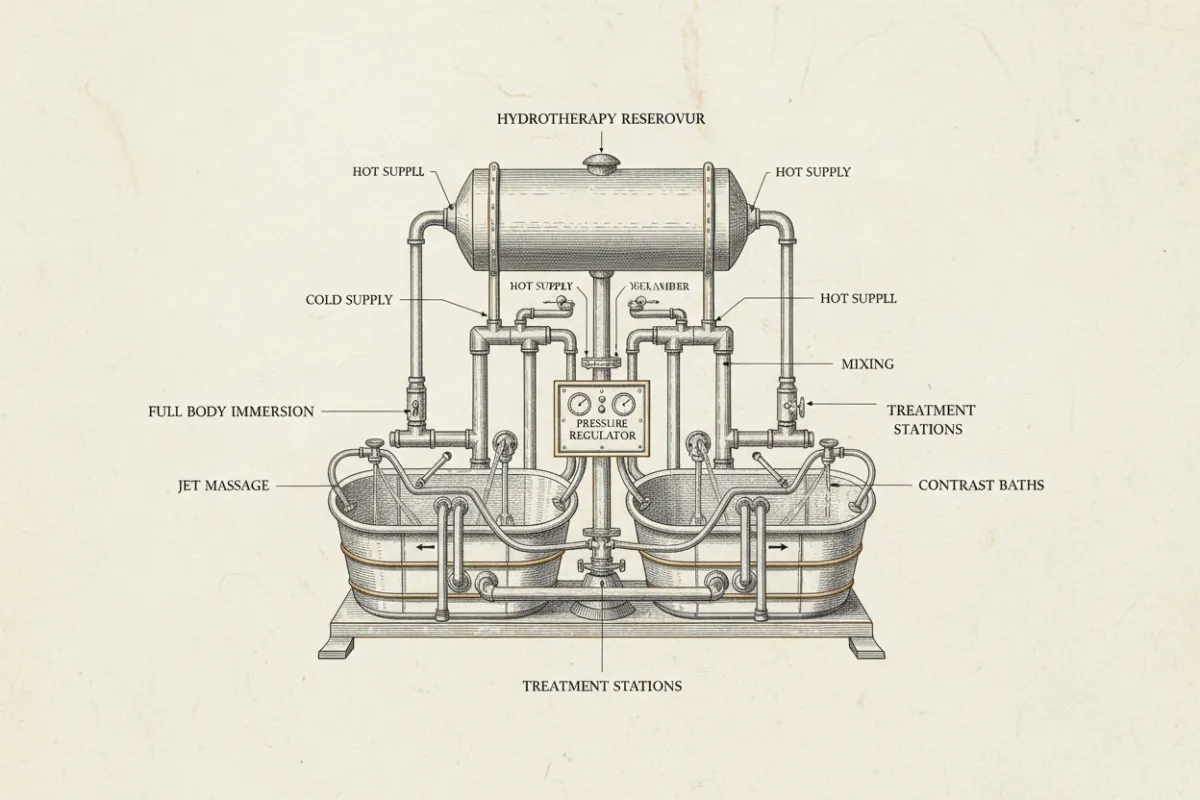
HYDROTHERAPY
Using prolonged baths and temperature shocks to calm the nervous system, providing temporary physical relief without lasting behavioral change.
Despite changing medical attitudes, relapse rates remained high, and many physicians considered chronic alcoholism extremely difficult or impossible to treat.
THE MEDICAL IDEA THAT WOULD REACH BILL W.
That environment explains the importance of Dr. William Silkworth’s contribution. He supplied Bill with a medical explanation for why some alcoholics could not simply exercise normal willpower over drinking.
By the early 1930s, the necessary elements were moving closer together: medical hopelessness, psychological transformation, spiritual surrender, personal testimony, disciplined daily living, and alcoholics helping one another.
1935
PRE AA - WORLD
SOURCES AND HISTORICAL NOTES
History built from records, scholarship, and careful distinctions.
NEWSPAPER ARCHIVE
Athens Banner-Herald
Athens, Georgia
May 21, 1965
Home Edition
Page Three, Image 3
BIOGRAPHICAL REFERENCE
Richard R. Peabody
Wikipedia
PRE-A.A. ARCHIVE
Tracing the medical, psychological, spiritual, and mutual-aid traditions that shaped the conditions from which Alcoholics Anonymous emerged.
PRE-A.A. WORLD — HISTORICAL EDUCATION PROJECT
This independent historical presentation is intended for educational purposes and should not be interpreted as an official publication of Alcoholics Anonymous World Services, Inc.
BIOGRAPHICAL REFERENCE
Richard R. Peabody
Wikipedia
Certain early A.A. stories were transmitted through personal recollection, correspondence, later interviews, and institutional histories. Dates and details—particularly those involving Rowland Hazard’s treatment by Carl Jung—may vary among sources. The page should clearly distinguish established facts, widely repeated accounts, and historical uncertainty.
MEDICAL-HISTORICAL SCHOLARSHIP
Early Alcoholism Treatment: The Emmanuel Movement and Richard Peabody
PubMed
GEORGIA A.A. HISTORY ARCHIVE
Documenting the worldwide origins, statewide development, and local Athens history of Alcoholics Anonymous.
Navigation
Home
World History
Georgia History
Athens History
Interactive Map
People
Groups
Documents
Sources
Research
Research Method
Full Bibliography
Submit a Record
Accessibility
Contact
This independent educational history project is not affiliated with, endorsed by or officially sponsored by Alcoholics Anonymous World Services, Inc. Alcoholics Anonymous, A.A. and related marks may be protected trademarks. Historical interpretations should be checked against official A.A. publications and primary source materials.